Lilies and Cats: Which Lilies Are Toxic and What to Do (FDA)
Every part of a true lily is dangerous to a cat. Here is what the FDA says.
We may earn a commission when you buy through links on this page, at no extra cost to you. This does not change which products we cover. How we make money.
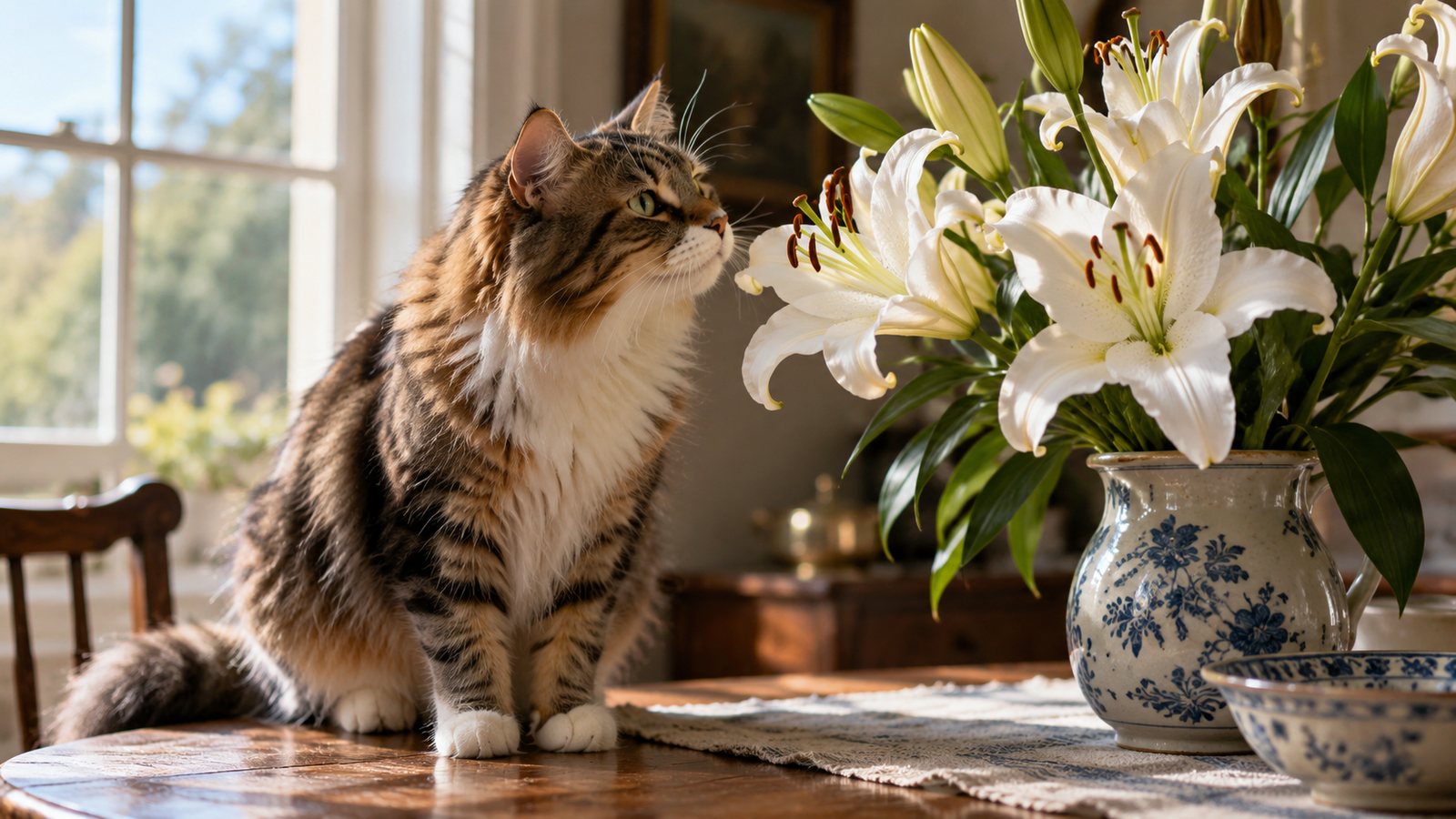
The FDA says the whole plant is toxic to cats in the true lily and daylily families: stem, leaves, flowers, pollen and even vase water. A small bite or a few grains of pollen licked off fur can cause fatal kidney failure in less than 3 days.
The most dangerous lilies (FDA)
- Asiatic lily, including hybrids
- Daylily
- Easter lily
- Japanese show lily
- Oriental lily
- Rubrum lily
- Stargazer lily
- Tiger lily
- Wood lily
Timeline of signs
- 0 to 12 hours: lower activity, drooling, vomiting, loss of appetite
- 12 to 24 hours: more urination, dehydration
- 24 to 72 hours: kidney failure, fatal without treatment
Other “lilies”
Lily-of-the-valley can cause dangerous heart rhythms, and gloriosa lily tubers can cause organ failure, in cats and dogs. Calla and peace lilies cause mouth irritation and drooling; Peruvian lily causes mild stomach upset.
The FDA advises not bringing these lilies home if you have a cat. For food hazards, see foods toxic to dogs and cats.
Frequently asked questions
Are lilies toxic to dogs?
The FDA says dogs that eat true lilies may get minor stomach upset but do not develop kidney failure. Lily-of-the-valley and gloriosa lily are dangerous to both cats and dogs.
How fast do I need to act?
Immediately. The FDA says if treatment is delayed by 18 hours or more, the cat will generally have irreversible kidney failure.