Pet Microchips: How They Work and Why Registration Matters (AVMA)
A microchip only works if the registry has your current contact details.
We may earn a commission when you buy through links on this page, at no extra cost to you. This does not change which products we cover. How we make money.
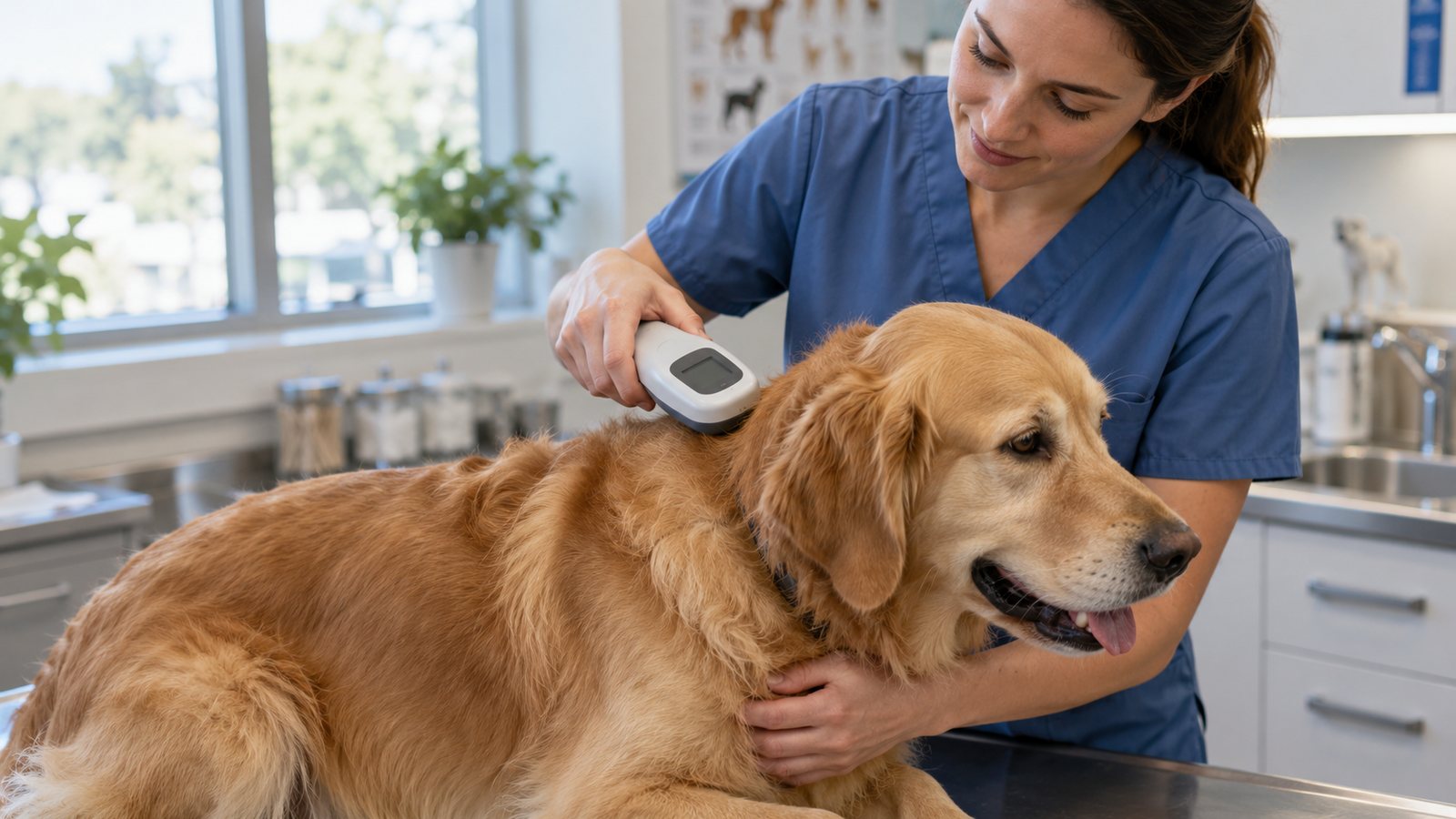
What a microchip is
The AVMA describes a microchip as about the size of a large grain of rice, implanted just under the skin with a sterile needle. In the US it usually goes between the shoulder blades. Most pets feel only brief discomfort, like a routine vaccination.
How it works
The chip has no battery. A scanner sends a low-power radio signal and the chip replies with its unique ID number. Some newer chips can also report body temperature.
Which chip
There is no single US standard. The AVMA supports ISO-compliant chips, which use a 15-digit ID and 134.2 kHz. That helps if your pet travels abroad; the CDC requires dogs entering the US to have a chip readable by a universal scanner (see our dog travel guide).
Registration
The chip stores only a number. You must register it and keep your contact details current. August 15 is Check the Chip Day, a yearly reminder. Ask your vet to scan the chip at checkups.
Frequently asked questions
Does a microchip track my pet's location?
No. The AVMA says a chip has no power source and only transmits an ID number when a scanner is passed over it. For live location you need a GPS tracker.
How do I find my pet's registry?
Use the AAHA Microchip Registry Lookup Tool with the chip number, or ask your vet to scan the chip.